📰 Le Fil I Pascal Lorne (MBA96) - Entrepreneurship: creating value for society

Lire l'article original en français dans le magazine Le Fil #8
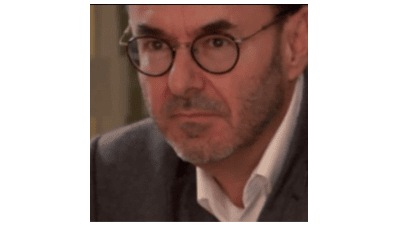
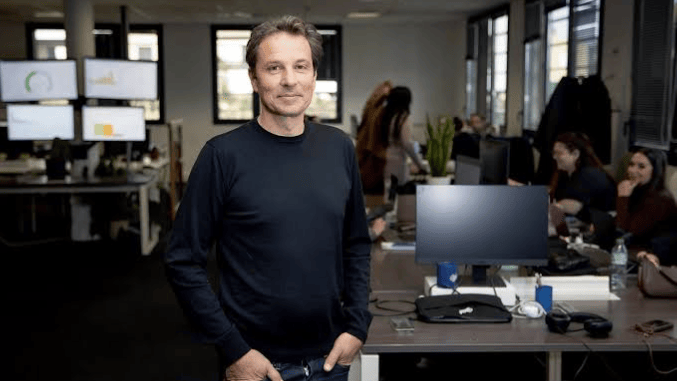
Pascal Lorne (MBA96), Founder & CEO of Gojob
Entrepreneurship: creating value for society
Since graduating from emlyon, serial entrepreneur Pascal Lorne (MBA96) has launched one venture after another, from online mapping to mobile messaging, before founding Gojob, a digital staffing platform. His conviction is that work is about far more than economics: it can be a powerful social driver. Whether his ventures have succeeded or failed, they have all taught him the same lesson, namely that entrepreneurship is fundamentally about people, impact and openness to others.
Career path
1992 - Engineering degree, Joseph Fourier University, Grenoble
1995 - Engineering degree, University of Applied Sciences, Konstanz
1996 - MBA emlyon
1997 - Co-founder and CEO of Ismap, an online mapping startup
1998 - Founder and President of the Impacton Foundation
2004 - Co-founder and CEO of mobile messaging company Miyowa
2013 - Founder and CEO of social network Let.com
2015 - Founder and CEO of staffing platform Gojob
2018 - President and founder of French Tech Aix-Marseille Région Sud; co-founder and Secretary General of the French Impact association
2025 - Japanese group Persol invests €120 million in Gojob and becomes its lead shareholder alongside the Impacton Foundation
You founded Gojob, a fully digital staffing platform, in 2015. What was the idea behind it?
It all came from something I experienced myself. I’d been an entrepreneur for almost 20 years and, having sold several companies, I was financially comfortable. So I decided to take two years off. It didn't take long for me to see in the eyes of my friends, family and even my children that I was becoming less interesting to them and, in a way, losing my substance. Every morning, I'd look in the mirror and ask myself what use I was. Work gives people a sense of dignity and helps them find their place in society. Whether people are out of work by choice – taking a break, changing careers or caring for loved ones – or through circumstances beyond their control, because they don't have the right connections, background or resume, the impact on them is ultimately painful. We live in a complex society where we need to build stronger bonds and show greater solidarity. Like sports, the world of work brings people together and helps them connect across differences in age, gender and background. These are, in fact, the three main grounds for workplace discrimination in France. Beyond its economic impact, France's unemployment rate (close to 8%) is therefore above all a societal issue. Gojob was conceived as a political project, with a broader social purpose. I chose to place my shareholding in an endowment fund from day one, as part of a long-term vision based on collective ownership. I'm not in business to make my heirs rich, but rather to create value for society. Today, even after some incredibly tough times – we've come close to going under four times, lost clients, had to lay people off and failed to secure funding – I still love going to work every day and being with my team. That means everything to me!
What have been the key milestones in Gojob's growth?
The first was landing our first major corporate account just six months after launch: PSA, now part of Stellantis. Having that first major name on board allowed us to start scaling up. The second milestone was State's investment in the company through the Caisse des Dépôts et Consignations, followed by asset manager Amundi. Both are long-term investors committed to regional development and social impact, and they helped us pick up the pace. The third was our move into the US market in 2021. By then, Gojob was already generating €100 million in revenue in France. I went to New York on my own, armed with little more than determination,
to set up the US subsidiary over the course of a year. The fourth milestone was our contract with France Travail to supply our AI engine, Aglaé, which focuses on candidates' soft skills and includes an anti-discrimination filter. Currently being rolled out, our tool is expected to double the productivity of staff helping unemployed people get back into work. It will also be deployed by the French military and several other public-sector organizations. This is about serving the wider community and bringing a fresh approach to public institutions that affect millions of people. The fifth big step came in 2025, when we signed a joint venture agreement with Japan's second-largest staffing group, Persol, with which we share the same values. Persol wants to expand beyond Asia, while we want to take Aglaé beyond Europe and the US. Our businesses complement each other extremely well, and the synergies are already proving very effective. Persol is 50 times bigger than Gojob, yet it has a lot of respect for our technological advance. We, in turn, greatly admire the history of the group, which was founded over 50 years by a remarkable woman named Yoshiko Shinohara.
What are your ambitions for Gojob?
With a financial partner as strong as Persol behind us, we're now looking to grow through acquisitions while maintaining the momentum of our organic growth. Our goal is to reach €1 billion in revenue within five years.
What lessons have you learned from your previous entrepreneurial ventures, Ismap, Miyowa and Let.com?
Having the right people around you is absolutely essential! I've had the most success with projects where the people working alongside me were more skilled than I was. A CEO doesn't have to be the smartest person or the hardest worker (though I certainly put in the hours!). What matters is knowing how to choose the right team. It's like climbing a mountain: with a trained, positive team, you're more likely to make it to the top, however tough the climb. By contrast, the ventures that proved most difficult were those where we got the timing or execution wrong.
"A CEO doesn't have to be the smartest person or the hardest worker [...]. What matters is knowing how to choose the right team"
With Let.com, you wanted to create a social network bigger than Facebook…
It was a very different era. My previous company, Miyowa, had become Facebook's largest app provider. When I met Mark Zuckerberg, Facebook had just 20 employees, compared with our 200. We were way ahead technologically on mobile, which Facebook hadn't yet ventured into – they were still entirely web-based. For a while, we thought we could use that head start to get ahead of them… But reality soon caught up with us! [laughs]
And Ismap, your pioneering online mapping startup? Do you think you sold it too soon?
A little too soon or too late, I don’t know. Ismap was the French forerunner of Google Maps. I co-founded it in 1997, in the very early days of the internet, when there wasn’t really a business model. Then the dot-com bubble burst in 2000, and we were caught up in the fallout. We sold the company just as Google Maps was starting to take off. I was only 25, and it was a bit like doing a second MBA after emlyon… [laughs]
You co-founded the national French Tech initiative and French Tech Aix-Marseille, and helped establish the French Tech labels. Is collective action important to you?
Yes, because we're not on our own – we're surrounded by people, and what really drives me is doing things together. When I see people full of energy who just need a little spark to get
going, I want to help them make it happen. I also have very little patience for absurdities. So when I come across people who genuinely want to make things better, I'm happy to get involved, bring them together and help put collective solutions in place.
What kind of absurdities do you have in mind?
Certain politicians who spout nonsense to stir up populist sentiment. For example, you can't simply make France's national debt disappear. And the country needs immigration to function. Ultimately, you can either stand for election and fight them at their own game, or challenge them through entrepreneurship. It's a quieter approach, but probably a more effective one.
Where does your desire to make a difference in society come from?
I suppose it runs in the family. I grew up in a business-minded household where giving back to the community was equally important. My father was a successful entrepreneur, while my mother fostered children. There were always eight or nine of us at home: my five sisters and me, plus children placed in our care by the French child welfare system, some of them with disabilities. Being exposed to such different worlds from an early age was incredibly enriching and had a profound effect on how I relate to others. When I encounter people who are different from me, my instinct is curiosity, not distrust.
"When I encounter people who are different from me, my instinct is curiosity, not distrust."
You regularly speak out in the media on issues such as permanent employment contracts and AI. Why is it important to you to have a voice in the public debate?
As I said, Gojob is very much a political commitment for me. Our politicians lack the practical experience and credibility to give substance to their arguments, which are completely hollow. Having built Gojob, I know at least a little about what I'm talking about when it comes to work – probably a lot more than the candidates running for president, in any case. More broadly, business leaders need to make their voices heard more often, challenging misconceptions and explaining what gets them out of bed every morning. It's simply wrong to assume that people start businesses just to get rich. The idea that “business owner equals wealth” creates a disconnect that does society no favors. Even outside the social and solidarity economy, money is rarely the sole motivation for starting a business. What entrepreneurs really want is to put their creativity to work and develop projects. They're developers, with a vision and a message. Sometimes they make a great deal of money, but not always. And even when they do, they can end up losing it all. But if they stay silent, they miss the chance to correct the record and explain what their business stands for and that's a shame.
How would you define yourself? A serial entrepreneur, a social investor?
I'm not really comfortable with labels. I'm just Pascal Lorne: someone who loves exploring, working with others and trying to make the world a better place.
You have two engineering degrees, one from France and one from Germany. How did the emlyon MBA fit into your career journey?
I still remember Patrick Molle, emlyon's director at the time, addressing us at the start of the program. He told us the school would equip us with a toolbox, but that it would be up to us to know which tool to use and when. And that has been the case. I draw on what I learned in marketing, finance, management and macroeconomics every day. It's given me the right instincts and the right language to communicate with my team. You have a fantastic training program. And I'm not just saying that to flatter you or win over your readers!
What else do you remember from your time at emlyon?
The case studies made the biggest impression on me. For my very first one, there were five of us crammed into a small room, with completely different backgrounds: some were engineers, others had humanities degrees, and we ranged in age. We had to come to a consensus. We spent 40 hours pulling the case apart from every angle and arguing over it. Our recommendation came near the bottom of the rankings – we'd got bogged down in the detail and completely missed the point. The top-performing group had spent just five hours on the same case. They'd taken a much more pragmatic approach, cut through the data to identify what really mattered and made a few phone calls to check their facts. Their collective and emotional intelligence was far greater than ours. It taught me a valuable lesson: you can argue passionately about almost anything and end up losing sight of what really matters.
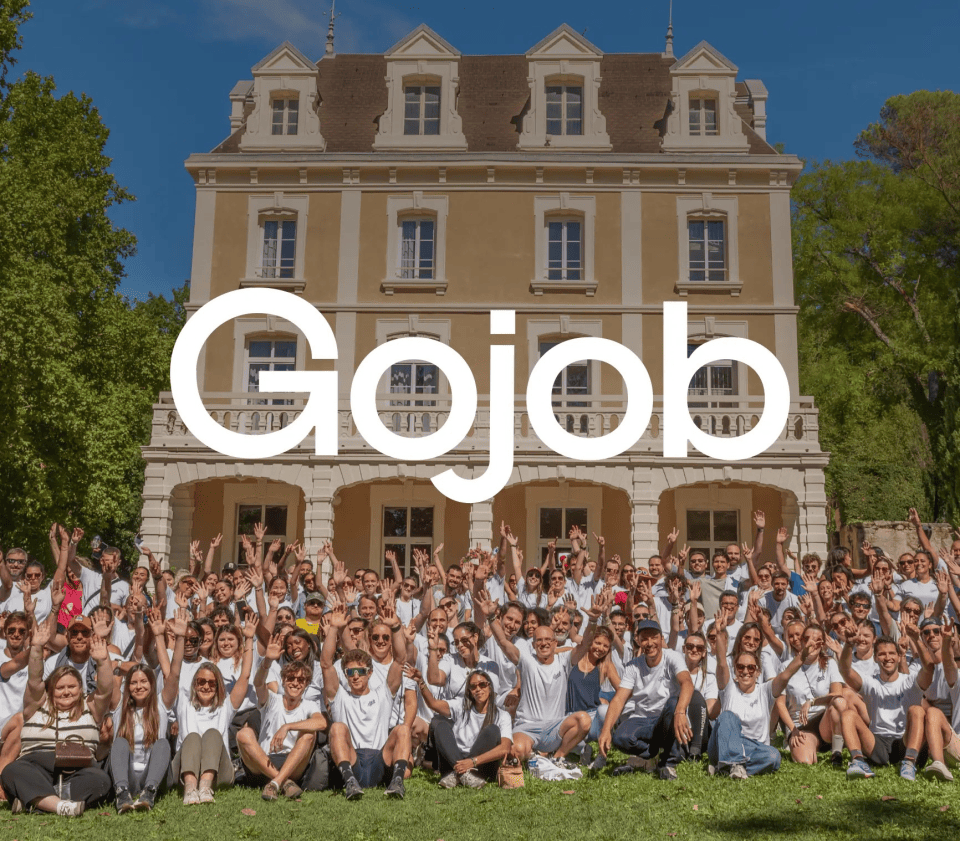
The Gojob teams together. For Pascal Lorne, the venture is also a “very political” commitment to promoting work.
And what led you to study epigenetics at UC Berkeley in 2014?
I took the courses during a career break, but never sat the exams. I ran out of time, and getting the qualification wasn't really what interested me. Epigenetics is a subject I'm fascinated by, though, and I still explore it in my spare time.
You have an international career, but Gojob remains firmly rooted in Aix-en-Provence. What keeps you in the south of France?
It's a good place for entrepreneurs because the quality of life is incredible, and attracting and retaining talent is easier than in Paris, where we face competition from the major tech companies when recruiting. We have around 150 people based in Aix and just under 100 at our offices in central Paris. When I'm in France, I spend almost half my time in Paris, so that means traveling back and forth every week, but I don't regret it for a second. Aix has excellent transport links, with high-speed trains to Paris taking just three hours and Marseille-Provence International Airport only 20 minutes away. It's also an ideal place for employees who want to settle down and raise a family: no more long, exhausting commutes on public transportation twice a day. France is one of the few countries where so much still revolves around the capital. Decentralizing France is the way of the future.
One final question: is politics really something you'd never consider?
Maybe. It's not on my radar right now, but you never know what life has in store. [laughs]
Gojob
• Forecast: €300 million in revenue in 2026, with a target of €1 billion within five years
• 300 employees
• 55,000 temporary workers
• Locations in France and internationally:
– Headquarters and AI lab remain in Aix-en-Provence
– Offices in Paris, New York and Atlanta

Comments0
Please log in to see or add a comment
Suggested Articles