
Lire l'article original en français dans le magazine Le Fil #8
Cybersecurity - It's everyone's business
With billions of connected devices in use and AI evolving faster than the defenses meant to keep it in check, the attack surface has never been greater. France learned this the hard way over the summer, when the DGFiP (French tax authority) and the Ministry of Education were hit by attacks. Ransomware, deepfakes, social engineering: as cyberthreats constantly evolve, emlyon graduates and experts examine the risks and the strategies for addressing them.
Philippe Hoddé
emlyon business school
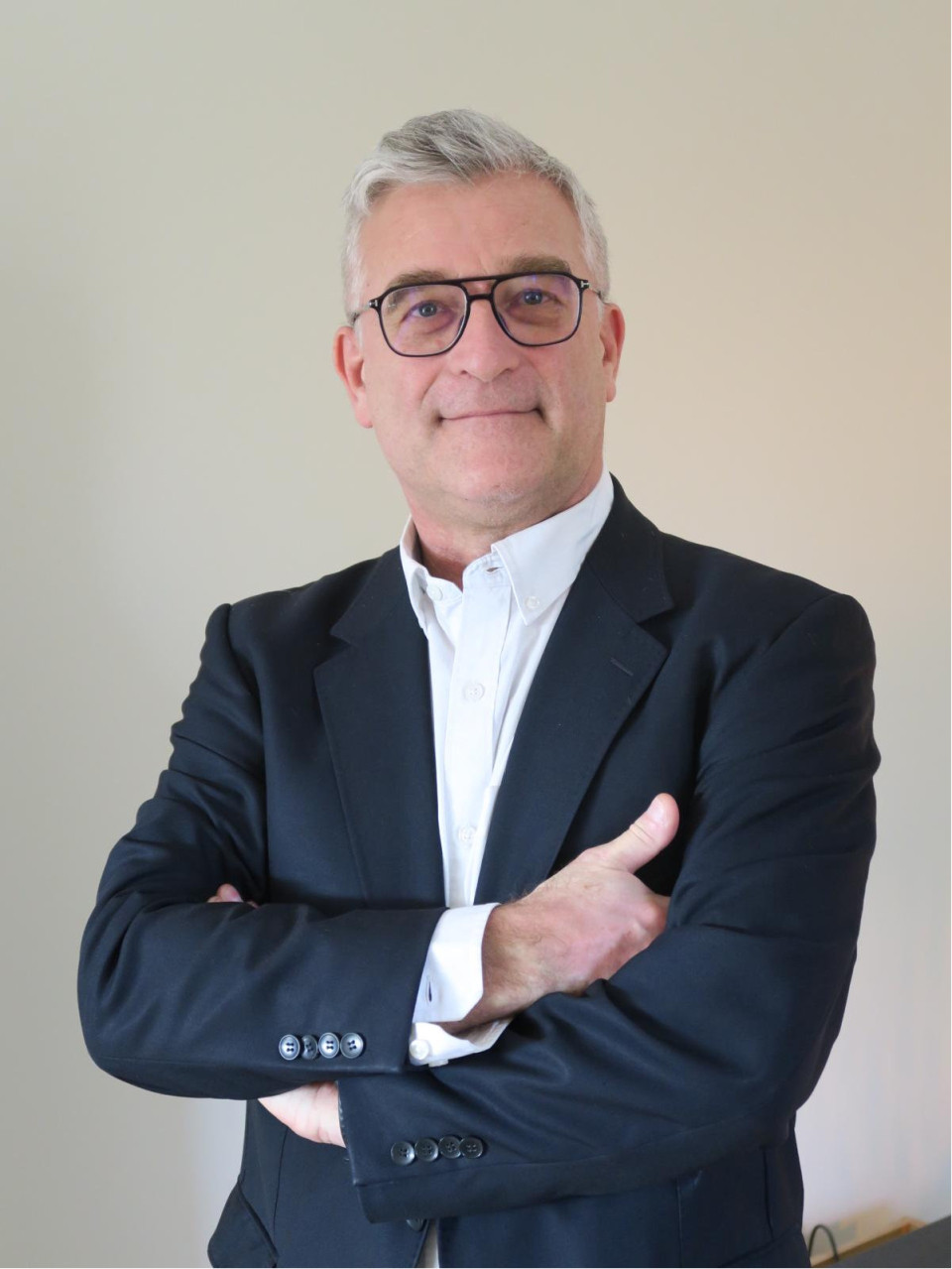
“There are more than 6 billion smartphones in use around the world, not to mention connected devices. Every one of them creates a potential entry point for cyberattacks and puts personal data at risk,” points out Philippe Hoddé, co-director of emlyon business school’s MSc in Strategic Intelligence & Global Risks. As threats proliferate – from fraud and DDoS1 attacks to ransomware² – it is crucial that businesses protect information and ensure operational continuity.
“France is one of the countries most heavily affected by data breaches, as nearly half of all small and medium-sized businesses say they have experienced a cyber incident,” notes Serge Misik (EMBA participant), Chief Information Security Officer (CISO) at the Paris Ouest La Défense public territorial establishment. “We can no longer afford to bury our heads in the sand,” says Julien Feurtey (EMBA24), Vice President of Defense & Public Affairs at Bloom Social Analytics. “A mid-sized business could find its production facility or administrative systems completely paralyzed by a cyberattack.” To which Philippe Hoddé adds “It’s not a question of if a crisis will happen, but when. You have to be ready for it.” Cybersecurity is by no means therefore a luxury. And yet...
"It's not a question of if crisi will happen, but when. You have to be ready for it."
Paul Florentin (PGE25)
Wavestone

Risks and costs
“It’s still underestimated, starting with the costs involved,” says Paul Florentin (PGE25), Senior Consultant in AI Cybersecurity at Wavestone. “As far back as 2017, the NotPetya ransomware attack cost Saint-Gobain €250 million in revenue.” Constance Van de Walle (PGE21), a Cybersecurity Sales Expert at Microsoft who helps banks, insurers and mutual insurance companies build digital resilience, adds “For our clients, a cyber crisis can account for 3% to 6% of EBITDA.” “Financial losses stem not only from business disruption, but also from the cost of fixing the damage, bringing in specialist support and paying regulatory fines if personal data they hold is compromised,” explains Stanislas Lycholat (MS11), Head of Cybersecurity GRC Consulting & Crisis Management at Thales.
Constance Van de Walle (PGE21)
Microsoft
 Then there is the damage to reputation: sensitive customer data being leaked publicly or put up for sale, a tarnished corporate image, and more. A “poisoned” chatbot could even start recommending a competitor’s products. “One Reddit user got a Chevrolet dealership’s chatbot to recommend a Tesla,” Paul Florentin recalls. “It takes an average of 90 days to detect a cyber crisis. If the IT environment isn’t properly segmented, it’s impossible to know how far an attacker has got – or whether they’re still inside the system! They typically start at ‘touchpoints’, such as a server with no sensitive data. If no one reacts, they gradually make their way toward the company’s crown jewels,” explains Constance Van de Walle.
The AI factor
AI’s exponential advances are opening the door to many more cyber risks. “AI agents can now execute actions directly from text generated by LLMs3, raising major security concerns,” says Paul Florentin. Security by design – building security measures into AI agents from the outset – are now fairly well established, as are penetration tests designed to identify vulnerabilities to prompt injection4. Authentication standards, on the other hand, which determine who can access data, are designed for humans, not for constantly evolving AI agents.” AI agents are, in effect, new users of corporate IT systems and their access rights and permissions need to be defined and controlled.
AI is also compressing the time between a vulnerability being disclosed and cybercriminals attempting to exploit it. “For certain vulnerabilities, the gap is now just a matter of hours, giving defenders far less time to react,” warns Arthur Duchet-Suchaux (MS17), co-founder of Haryon, a software publisher specializing in automated penetration testing. AI can also be used to automate social engineering – “psychological manipulation techniques (including phishing) that exploit users’ cognitive biases to make them act in error or hand over sensitive information (usernames, passwords and access codes).”
To counter these threats, Microsoft offers its clients a single platform providing “end-to-end visibility of their users, identities (employees and external consultants), devices (tablets, phones, etc.) and data (cloud applications, Gmail, WeTransfer, etc.),” explains Constance Van de Walle. “Our AI solution correlates weak signals to spot the early signs of an account being targeted. If you’re joining a Google Meet call from Paris while an email is sent from your account in Hong Kong, the platform flags the anomaly and automatically takes action or alerts the customer’s security team so they can step in.”
Stanislas Lycholat (MS11)
Thalès
 Simulating a cyber crisis
“In a cyberattack, every minute counts because the window for responding is very short,” explains Julien Feurtey. His 18 years as a French Navy officer specializing in operations, command and cyber defense taught him how to make decisions quickly. “When a crisis hits, 48 hours is already too long,” he believes. Yet in these situations, senior executives are left to make decisions on their own and are not necessarily prepared. They need to be trained through simulations.
This is one aspect of Stanislas Lycholat’s cyber risk prevention work at Thales. “While large companies now have high-performance defense and detection systems, their ability to respond operationally is still lacking. We run crisis management exercises to make sure they have the right governance in place: decision-making and operational teams able to keep the business going in a degraded mode, in the event of a cyberattack. For example, we are currently preparing a one-day exercise for a CAC 40 group, bringing together its executive board and around 15 subsidiaries to face a scenario involving attacks across multiple entities. The goal is to assess their ability to communicate, coordinate and keep the business running.” Preparing an exercise of this kind takes between six and ten months.
Another exercise, tailored to a smaller business, featured a deepfake of the CEO telling the leadership team to pay a ransom after a ransomware attack. This was designed to see how the directors would respond. “They didn’t pay, but they lost valuable time: all systems were shut down for four to five hours during the simulation.”
Regulations are encouraging organizations to invest in security, but their levels of maturity still vary widely. “The European NIS2 Directive extends cybersecurity requirements5 to more than 15,000 French organizations across 18 sensitive sectors, including defense, energy and transportation. Its application depends on the nature and size of each organization,” explains Arthur Duchet-Suchaux. “Larger corporations generally have greater resources than small and medium-sized businesses. Banks and insurance companies, which have been regulated for many years, already have structured cybersecurity programs. The DORA regulation on digital operational resilience in the financial sector, strengthens these requirements.”
Constance Van de Walle points out, however, that approaches differ. “Many banks have chosen to keep their own data centers and avoid putting anything in the cloud. Others take a hybrid approach, keeping sensitive data in-house while relying on the big tech companies for internal administrative data.” She also notes that over the past five years, the people she deals with – DPOs6 and CISOs who may report directly to the executive committee or to the CIO7, depending on the organization – have taken on an increasingly central role. “They have more and more resources at their disposal. Executive committees have realized that a company might not recover from a cyber crisis.”
"Executive committees have realized that a company might not recover from a cyber crisis."
Serge Misik (appr. EMBA)
EPT Paris Ouest La Défense
 Cybersecurity in the public sector
The state, meanwhile, is struggling to protect its information systems, hampered by budgetary constraints. After more than 20 years in the private sector, Serge Misik joined the Paris Ouest La Défense public territorial establishment, which has centralized the role of CISO for 11 municipalities in the Hauts-de-Seine department – a first in the Greater Paris region. “There are few CISOs in the public sector, and only the largest public administrations have dedicated cybersecurity teams,” he explains. “I had to build a shared cybersecurity department from the ground up, using the American NIST framework and its six pillars: governance, identification, protection, detection, incident response and resilience.”
He points to several differences from the private sector: “The first is funding. After Covid, I had €3 million a year to spend in the private sector. These days, getting €150,000 feels like Christmas! It’s difficult to fund training to improve the cybersecurity skills of municipal staff. They know their IT systems inside out, but are ten years behind when it comes to cybersecurity. And the public sector training agency, CNFPT, offers almost nothing in this area. It’s also difficult to fund the purchase of new cybersecurity technologies.” IT departments are also understaffed, making it harder to implement remediation plans: “A critical vulnerability needs to be patched within 48 to 72 hours. In a municipal administration, that can take months.” Then there is the problem of outdated IT systems, some of which date back to the early days of the Internet.
Information sharing is also less fluid than in the private sector. Municipalities are slower to respond to cyberattacks than businesses, as they do not face the same risk of lost revenue. “However, the impact of public services being taken offline is becoming increasingly clear. The cyberattack on the DGFiP8 this summer should be a wake-up call.” Then there is the political dimension: “Elected officials tend to favor visible achievements, such as a soccer field, theater or school renovation. Cybersecurity, by contrast, is something you can’t see.” Nevertheless, Serge believes in the shared-services approach: “It’s a model with a future, for both the public sector and small and medium-sized businesses. It allows them to share expertise, best practices and documentation.”
MSc in Strategic Intelligence & Global Risks at emlyon
This 18-month, English-taught master's program equips students with the skills needed for strategic intelligence. It focuses on strengthening an organization’s ability to gather and analyze relevant information about its environment in order to identify potential opportunities and threats, with a particular focus on three global risk areas: geopolitics, the environment and cybersecurity. “Our program combines anticipation, theory and practical experience,” explains co-director Philippe Hoddé. The curriculum includes 45 hours of cybersecurity training, which comprises 15 hours on theoretical foundations and key challenges, and 30 hours of practical learning through case studies and simulations of cyber crises in business settings. Students learn how to manage emergencies in real time, covering all the organizational dimensions involved, from coordination and communication to negotiation and debriefing. Particular emphasis is placed on understanding the cognitive biases at work and developing preventive planning.”
The School is expanding its commitment to these subjects through emlyon tech school. After launching its first program component in spring 2026, it plans to roll out further offerings, including in cybersecurity
For more info: https://em-lyon.com/fr/etudiant/master/msc-strategic-intelligence-and-global-risks
What comes next?
The race between cyber defenders and attackers shows no sign of slowing down. “Anthropic’s Mythos model is so powerful that it can detect previously unknown security vulnerabilities,” explains Constance Van de Walle. On the defense side, the red and blue teams at major companies – which simulate attacks and test the resilience of their IT systems – now have powerful, specialized AI agents working alongside them. But AI models are also taking the place of human attackers, becoming increasingly formidable adversaries, especially as they are “only operating at 10% of their potential performance.”
Stanislas Lycholat highlights another emerging threat: quantum computers, which could eventually break encryption protecting data that is currently considered secure. This prospect is already driving a strategy known as “harvest now, decrypt later”, which involves intercepting encrypted data today so it can be exploited once quantum technology becomes sufficiently advanced. “This threat primarily affects organizations holding strategic information that will retain its value or need to be archived for decades, such as patents, banking data and information stored in embedded systems. They must therefore begin transitioning to post-quantum cryptography (PQC) without delay. This is a long-term project that will require significant investment.”
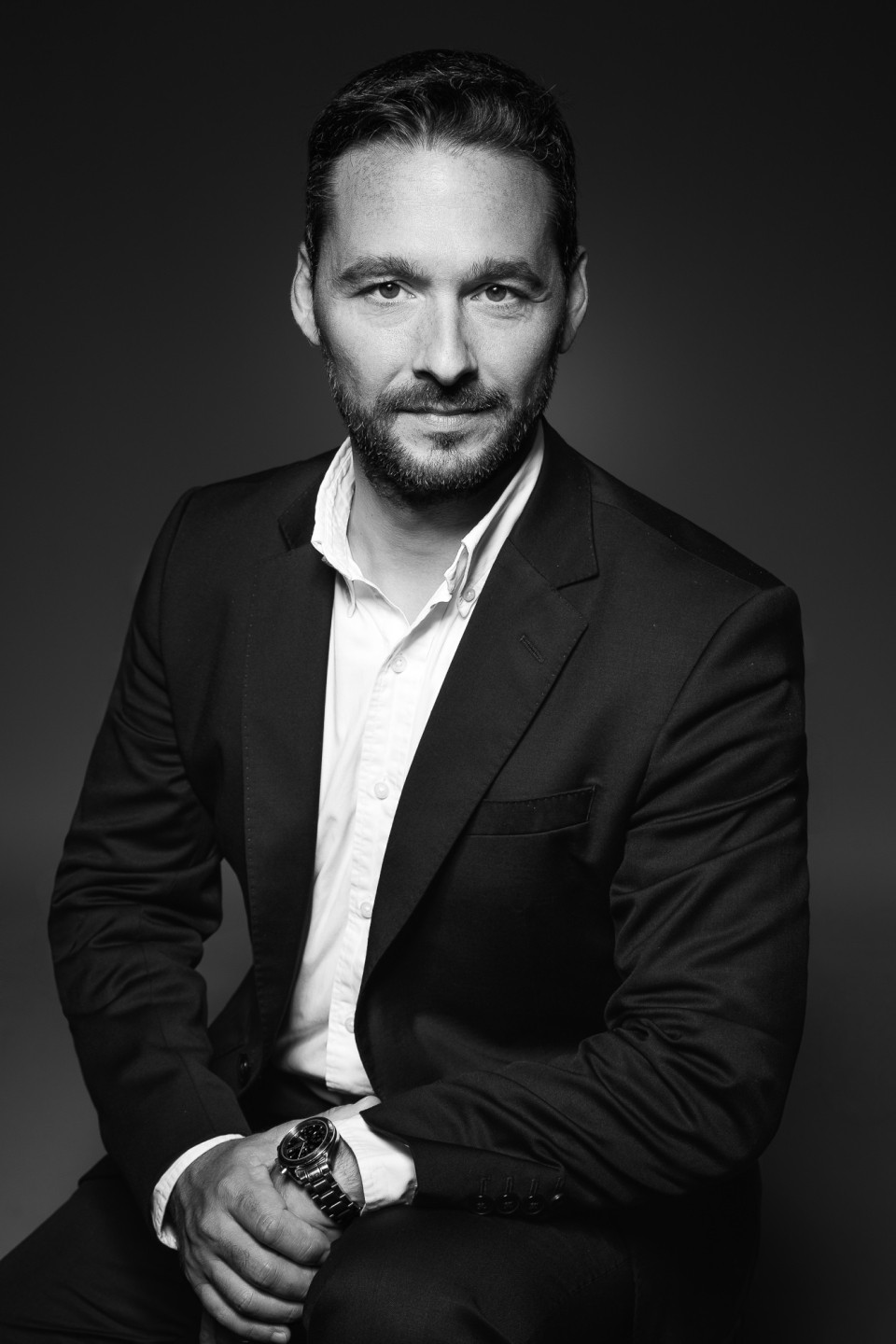
Julien Feurtey (EMBA24)
Bloom Social Analytics
 People are still the key
Yet the extraordinary speed of technological change should not be cause for despair. “People are still at the heart of cybersecurity,” emphasizes Serge Misik. “Leaders and employees alike need to be taught the risks. The biggest threat is still an accidental click on a link or attachment that unleashes a virus capable of spreading in seconds. Municipal employees and small-business staff often lack basic digital hygiene and the right security habits.” And they are not alone. “Even at large companies, business units and support teams are often unaware of the risks associated with AI – from deepfakes to feeding company data into chatbots,” says Paul Florentin. Julien Feurtey agrees: “A few simple measures, both human and technical, could prevent 90% of problems: monitoring networks, using two-factor authentication and reviewing employees’ access rights and permissions.”
"A few simple measures, both human and technical, could prevent 90% of problems"
Intelligence narrative: defusing crises
Bloom Social Analytics, which Julien Feurtey (EMBA24) joined as Vice President of Defense & Public Affairs, is an AI platform that uses social inference technology to map group dynamics and identify subtle warning signals online. “Our proprietary algorithm uses narrative intelligence to anticipate crises by analyzing conversations across the media landscape.” The approach can identify both foreign interference and manipulation campaigns and coordinated efforts to damage the reputation of a company or its executives. “This is not about stopping a cyberattack on an IT system, but rather detecting how narratives spread and exploit cognitive processes. Information attacks can target individuals, brands or entire countries. Companies can also use these techniques to undermine their competitors. Narrative intelligence is about protecting the truth against information attacks.”
Government resources
The ANSSI9 runs cybersecurity training programs throughout the country. “The France Relance 2021 recovery plan established regional CSIRTs (Computer Security Incident Response Teams) to help small and medium-sized businesses, mid-market companies, small municipalities and nonprofits respond to cyberattacks,” explains Julien Feurtey. As a result, 950 local public-sector organizations have benefited from an ANSSI cybersecurity support program. “The European Union has also created European Digital Innovation Hubs (EDIHs), which offer free cybersecurity assessments, action plans and training to microbusinesses, small and medium-sized businesses and local authorities. They can also help organizations access funding for cybersecurity solutions and specialist services,” adds Serge Misik.
Cybersecurity is also a field full of opportunities for emlyon graduates: “It’s an industry largely made up of software engineers and developers, but one that needs marketing and sales skills to bring start-ups’ solutions to market. Cybersecurity will always be the unseen side of the digital world, growing just as fast. It’s a dynamic, exciting sector with plenty of technical challenges, but also opportunities in HR – helping teams build cybersecurity awareness – and governance. I recommend it!” concludes Arthur Duchet-Suchaux.
"Cybersecurity will always be the unseen side of the digital world."
Career profile: Pentester (or acting like a cybercriminal)
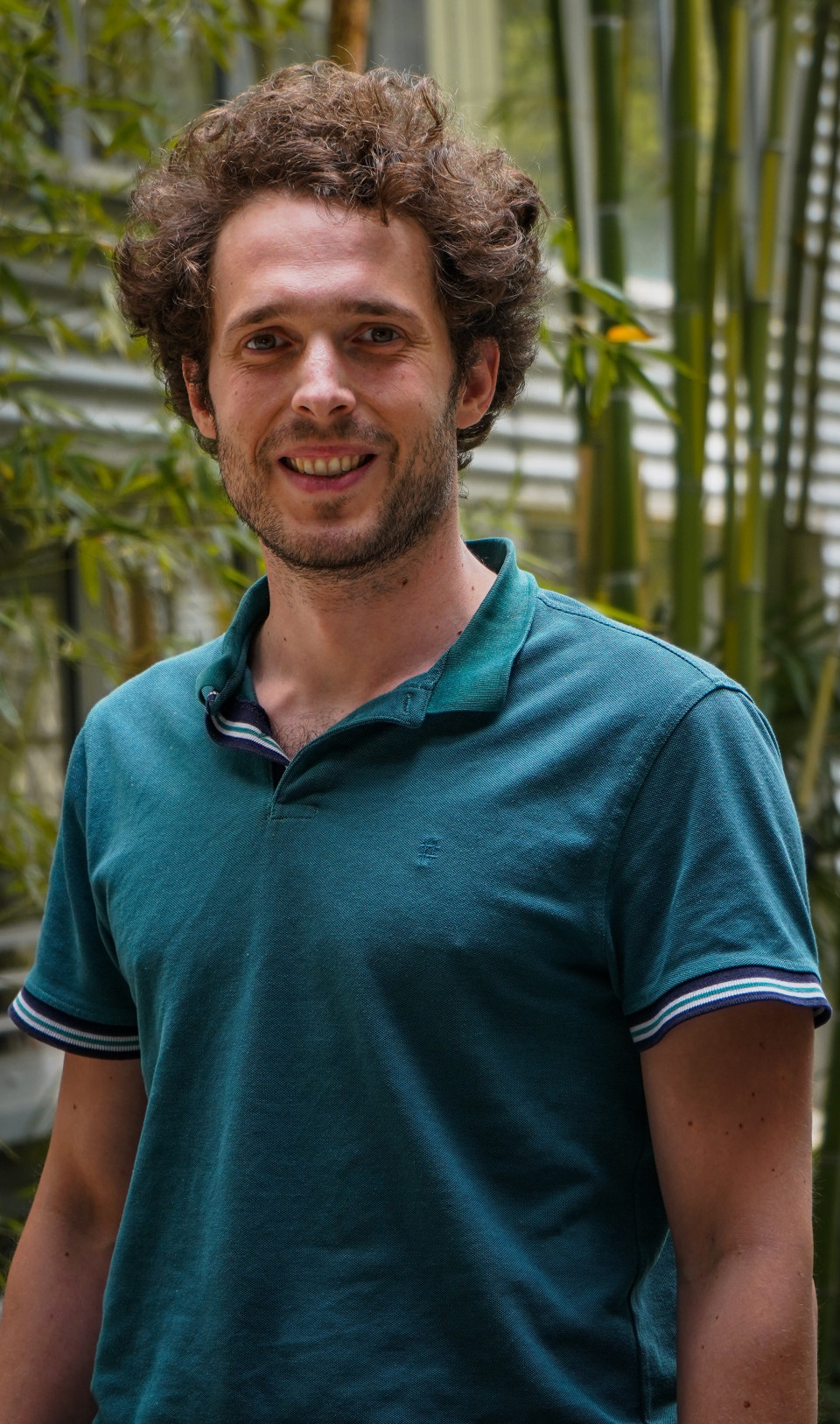 Arthur Duchet-Suchaux (MS17)
HaryonArthur Duchet-Suchaux (MS17) is co-founder of Haryon, a software company specializing in automated penetration testing for mid-market companies and large corporations. “A penetration test is a cybersecurity audit in which an expert acts like a cybercriminal, attempting to bypass a company’s security measures, uncover vulnerabilities and gain access to its information systems. To draw a parallel, imagine paying someone to simulate a burglar trying to break into your home: testing the doors and windows or finding a way in through the roof to steal cash and jewelry.”
Although one-off penetration tests are still essential, their findings gradually lose relevance as IT systems change and develop. Haryon automates pentesters’ techniques in customizable playbooks. CISOs and their teams can rerun these playbooks to map their exposure, simulate different attack scenarios and check that fixes have been effective. The platform runs in the client’s own environment, with controls that are transparent and tailored to its specific needs. So what’s next? “We want to integrate AI to strengthen our methods without taking the place of the end user’s expertise, connect our product with monitoring, detection and remediation tools, and keep a close eye on emerging technologies, such as LLMs and quantum computing, so that we can test them in the future.”
1- Attacks designed to take a website or server offline by flooding it with huge numbers of requests from multiple sources.
2- Malicious software that locks users out of their computers or files and demands payment return for the decryption key.
3- Large Language Model: an AI program designed to understand, interpret and generate text by reproducing patterns of human language.
4- Feeding malicious or deceptive information into a prompt to test whether the agent can identify and withstand it.
5- Including a requirement for executives to be trained in cybersecurity.
6- Data Protection Officer.
7- Chief Information Officer.
8- France’s Directorate General of Public Finances (DGFiP): 7,810 cyberattacks detected from January to the end of August 2026, versus 6,972 in all of 2025, affecting 678,000 users.
9- The French National Cybersecurity Agency, the country’s official reference authority for cybersecurity and cyberdefense

Comments0
Please log in to see or add a comment
Suggested Articles